Terrain & Caves
Terralith does not just add biomes -- it fundamentally changes how the Overworld's terrain looks and feels. Mountains are taller, caves are wilder, and the land between them flows with a level of detail that vanilla Minecraft never achieves.
Mountain Generation
Pack some scaffolding
Terralith mountains can reach Y=290, just 30 blocks shy of the build limit. A fall from these heights is fatal even with Feather Falling IV. Bring water buckets, elytra, or scaffolding when exploring mountain biomes.
Terralith's mountains are the first thing most players notice. Key details:
- Peak elevation reaches up to Y=290, nearly double the height of vanilla mountain peaks.
- Mountains generate with realistic slope profiles -- gradual foothills transition into steep cliff faces and jagged ridgelines.
- Snow coverage is layered and elevation-dependent, with layered snow (1-8 layers) creating natural-looking snowlines rather than the hard cutoff vanilla uses.
- Stone slabs are placed along terrain transitions to smooth out the staircase effect that normally appears on diagonal slopes. This single detail makes Terralith terrain look dramatically more natural.
Terrain Transitions
One of Terralith's subtler but most important features is how terrain transitions between biomes.
- Slab-based smoothing -- Where terrain changes elevation, stone and dirt slabs fill in the gaps to create gradual slopes instead of blocky steps.
- Layered snow -- Snow depth varies naturally by elevation and exposure, using all 8 snow layer heights.
- Biome blending -- Surface blocks gradually shift between biomes rather than cutting off abruptly. A forest fading into a desert will pass through a transitional scrubland.
Desert & Mesa Features
Terralith's arid biomes are anything but flat.
Sand Dunes
Rolling sand dunes create genuine desert topography. Dunes can reach 15-20 blocks in height with smooth windswept profiles on one side and steeper slip faces on the other.
Mesa Arches
Natural arches of terracotta and sandstone span gaps in mesa and canyon biomes. These are fully generated structures -- you can walk under (and on top of) them.
Dramatic Canyons
Deep canyons cut through desert terrain with layered sandstone walls showing distinct color bands. Some canyons are narrow enough to jump across at the top but open into vast chambers at the bottom.
Cliff Overhangs
Overhanging cliff faces create natural shelters and dramatic shadow effects. These appear in mesa, canyon, and mountain biomes.
Mega Ravines
Watch your step
Mega Ravines are deeper, wider, and longer than vanilla ravines. Falling into one without warning is a common way to lose your items. Listen for ambient cave sounds and watch the ground ahead of you.
Terralith generates Mega Ravines that dwarf vanilla ravines:
- Significantly deeper than standard ravines, often cutting from the surface all the way down into the deepslate layer.
- Wider openings with exposed ore veins along the walls.
- Lava pools at the bottom are common.
- Some Mega Ravines intersect with cave biomes, creating natural transitions between surface and underground environments.
Mega Geodes
What are Mega Geodes?
Vanilla amethyst geodes are small underground chambers. Terralith's Mega Geodes are 2-3 times larger -- massive hollow spheres lined with amethyst blocks and budding amethyst.
Key details:
- Found only through mining; there are no reliable surface indicators.
- The smooth basalt shell is thicker and more distinct than vanilla geodes.
- Interior space is large enough to build a small base inside.
- Amethyst yield is substantially higher than vanilla geodes.
- Calcite layer between the basalt shell and amethyst interior is preserved but scaled up.
If you are farming amethyst shards, finding a Mega Geode is a game-changer.
Volcanoes
Terralith generates massive volcanoes that are among the largest single terrain features in the pack.
- Volcanic structures can span thousands of blocks in diameter at the base.
- Lava flows run down the slopes, creating rivers of fire that are visible from far away.
- The central caldera contains lava lakes, obsidian platforms, and magma block fields.
- Found in Volcanic Crater and Volcanic Peaks biomes.
- Hostile mob spawning is elevated in and around volcanic terrain due to low light levels from the dark block palette.
Volcanic resources
Volcanoes are excellent sources of obsidian, magma blocks, and blackstone. The exposed deep layers also mean higher ore density than typical surface terrain. Bring fire resistance potions and mine the slopes.
Natural Arches
Found primarily in mesa and canyon biomes, natural arches are freestanding stone or terracotta bridges that span gaps in the terrain.
- Arches generate at various scales, from small 10-block spans to dramatic formations stretching 30+ blocks across.
- They are solid and walkable -- useful as natural bridges if you find them at the right location.
- Most common in Bryce Canyon, Desert Canyon, and Warped Mesa biomes.
Floating Islands (Skylands)
The Skylands biome generates floating islands suspended high above ocean surfaces.
- Islands hover at high Y-levels with open air beneath them.
- Four seasonal variants exist: Spring (flowers and green grass), Summer (dense foliage), Autumn (orange and red leaves), and Winter (snow-covered with bare trees).
- Waterfalls cascade off the island edges into the ocean below.
- Reaching them requires elytra, ender pearls, or a very tall pillar.
- Hostile mobs can spawn on unlit island surfaces at night.
Building on Skylands
While beautiful, Skylands islands have limited space and no natural barrier to prevent falls. If you plan to build here, start with fencing or walls around the edges. One wrong step is a long drop.
Vanilla Biome Enhancements
Terralith does not only add new biomes -- it also improves the ones you already know.
What changes in vanilla biomes? (click to expand)
- Forests -- Trees are taller with more varied shapes. Oak and birch forests feel denser and more realistic.
- Plains -- Denser grass coverage with more wildflower variety. Plains actually look like meadows now.
- Mangrove Swamps -- Enhanced with thicker root networks, more water channels, and denser canopy coverage.
- Deserts -- Rolling dune terrain replaces flat sand expanses. Cactus and dead bush placement is more natural.
- Badlands/Mesa -- Cliff overhangs and natural arches add dramatic verticality to terracotta plateaus.
- Mountains -- Higher peaks, smoother slopes, and better snow distribution as described above.
- Swamps -- Darker atmosphere with more dead trees and murky water coloring.
These changes are subtle but collectively make the vanilla biomes feel more polished and immersive.
Gallery
For screenshots of these terrain features in action, visit the Terralith Gallery.
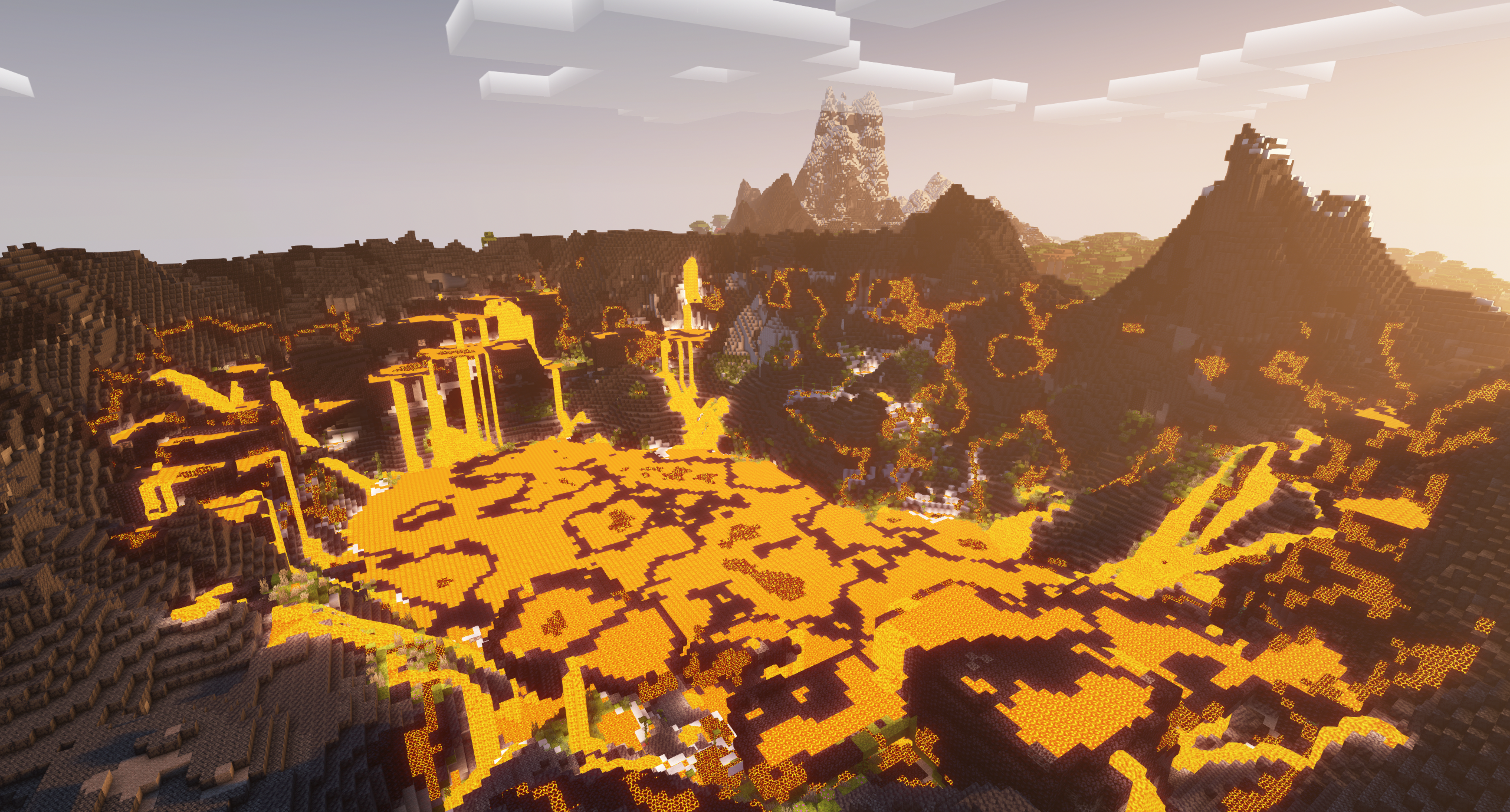 A volcanic crater biome showing lava flows and obsidian formations.
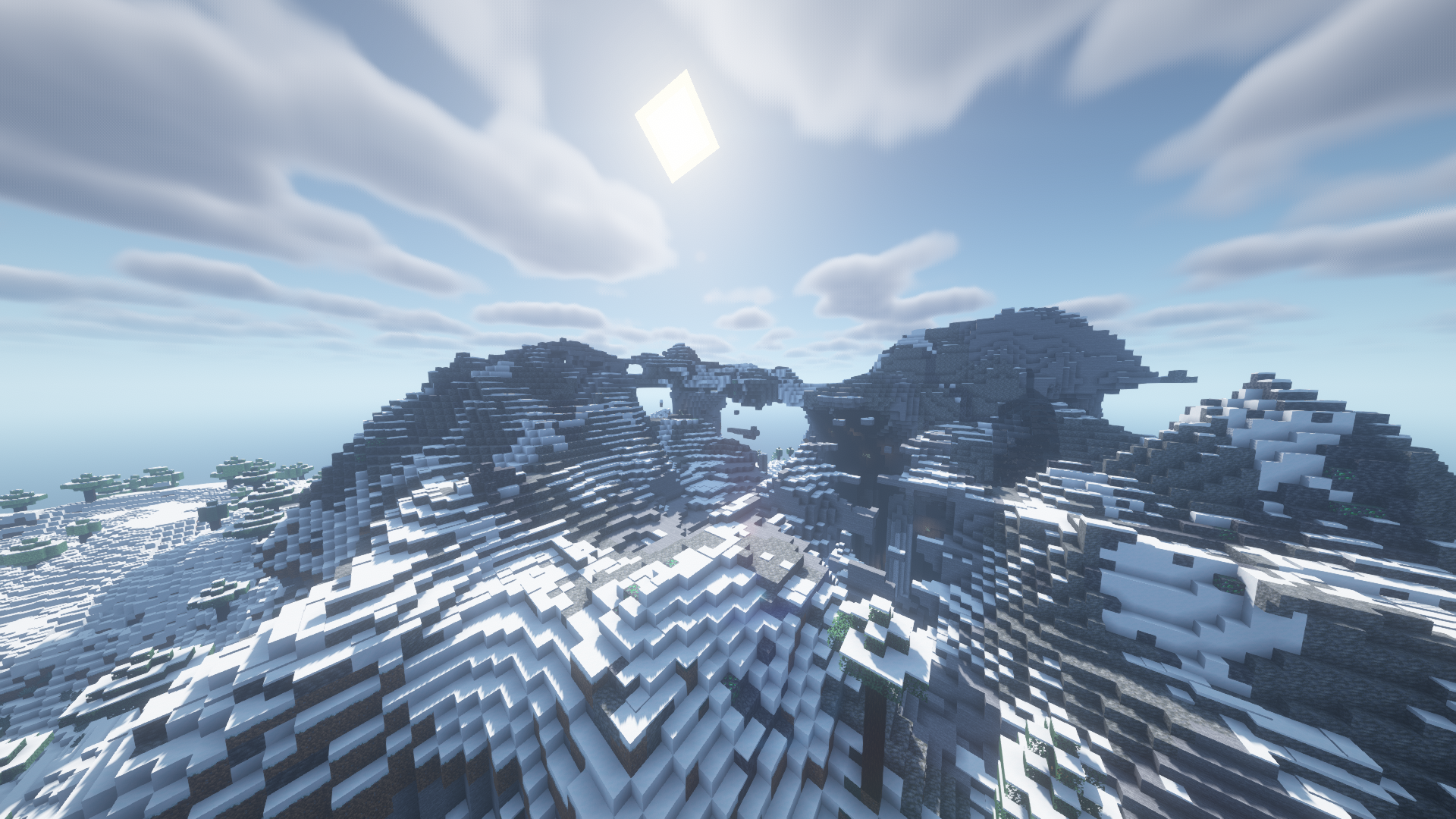 Emerald Peaks reaching toward the build limit.
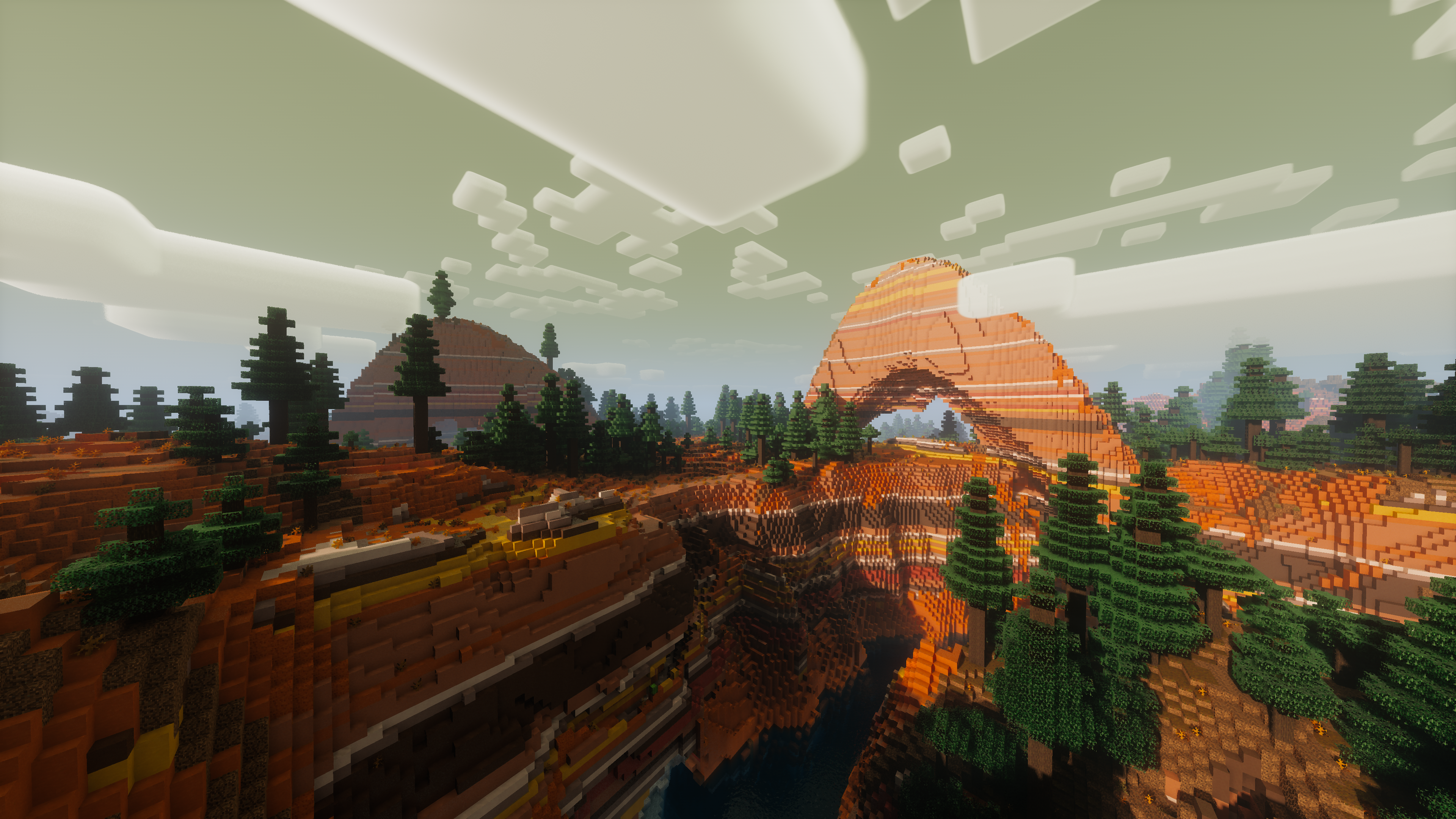 Bryce Canyon hoodoo formations at sunset.